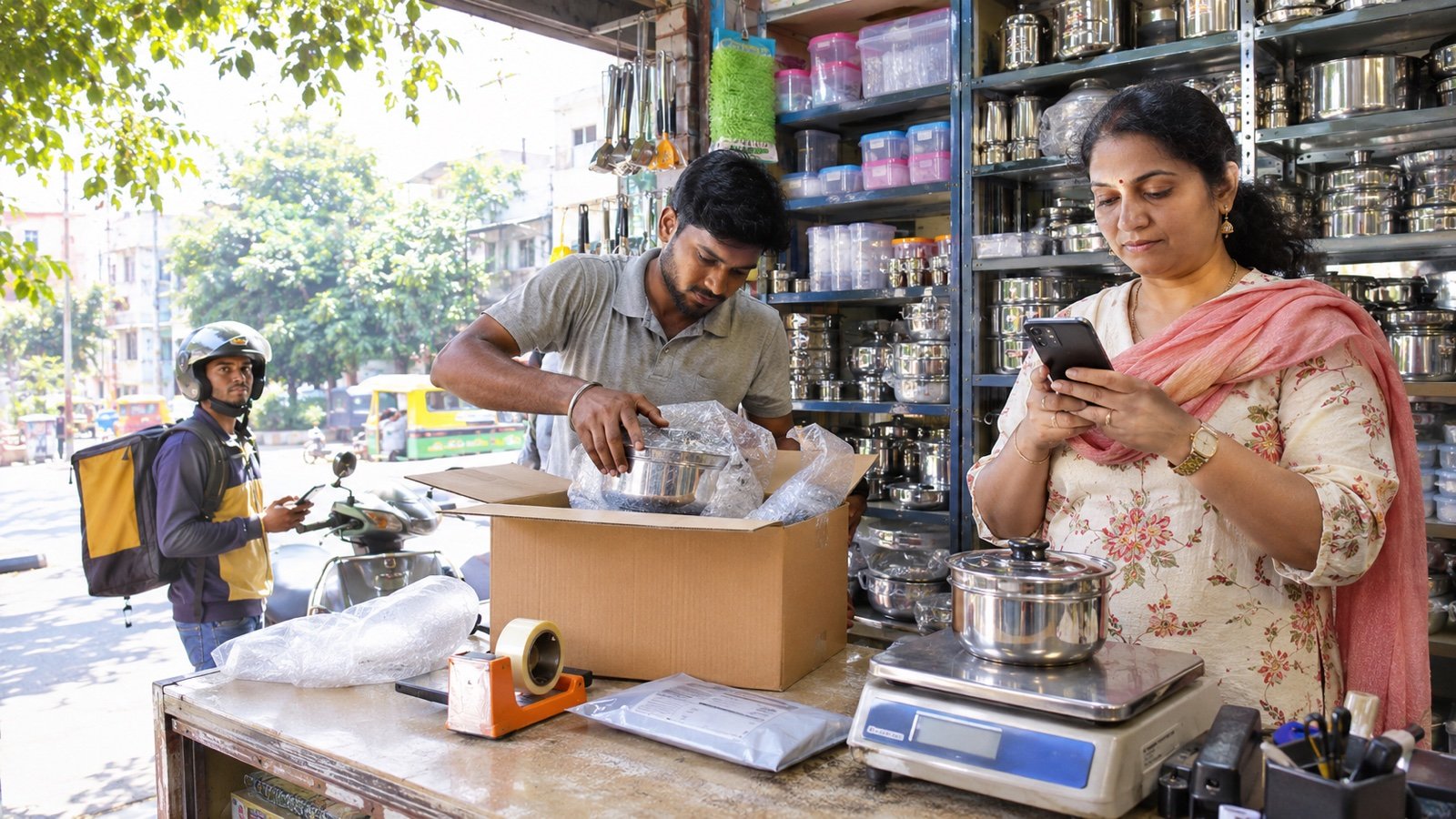
India’s MSME Trade Enablement and Marketing (TEAM) initiative is designed to help micro and small enterprises access digital commerce through the Open Network for Digital Commerce. Government information describes support around onboarding, cataloguing, account management, logistics and packaging, with a three-year programme window from 2024 to 2027 and an intended reach of five lakh MSEs, including a substantial focus on women-owned enterprises. The opportunity is wider market access without every seller building a marketplace from scratch.
ONDC is an open network, not one single ecommerce marketplace, and that distinction matters. A seller works through participating seller-network providers while buyer applications, logistics providers and other network participants can be different organisations. Discoverability does not guarantee orders, margins or service quality. This checklist helps an Indian MSME, franchise outlet or local retail brand become operationally ready before scaling. Eligibility, support, fees and participant terms should always be confirmed on current official portals and with the selected network provider.
1. Decide why the business is joining
Choose one primary objective: test demand beyond the current catchment, add a digital ordering channel, reach institutional or repeat buyers, move a selected assortment or learn online fulfilment. Do not define success as “go live on ONDC”. A clear objective determines the right products, geography, service promise and measurement period.
2. Verify TEAM and ONDC information through official channels
Review the current MSME TEAM and ONDC information, eligibility, application process and support available in the business location. The programme runs within a defined period, and operational details can change. Avoid paying an unknown intermediary who promises guaranteed ranking or orders. Record the official registration route, selected provider, support contact and every commercial term before sharing documents.
3. Understand the participant roles
Map the seller, seller-network participant, buyer application, logistics provider, payment flow and grievance path. Ask who creates the catalogue, who controls price and stock, where orders appear, who arranges pickup, when settlement happens and who handles each customer issue. The network model can increase choice, but the seller still needs one internal owner who understands the full journey.
4. Compare seller-network providers carefully
Request written details on onboarding, subscription or transaction charges, catalogue support, dashboards, integrations, training, settlement, cancellations, returns, support hours, data access and exit. Compare at least two suitable providers where practical. Choose for operating fit rather than a promotional claim. A provider that supports the category, language and dispatch workflow may be more valuable than the lowest headline fee.
5. Select a pilot assortment
Begin with products that have dependable stock, clear specifications, manageable packaging, acceptable margin and a low risk of subjective mismatch. Avoid putting the entire catalogue online on day one. Exclude fragile, highly customised, legally restricted or frequently unavailable items until the operating process is proven. The pilot assortment should teach the team without exposing the business to avoidable loss.
6. Build complete and honest product data
For every pilot SKU, prepare a stable name, category, description, brand, quantity or size, dimensions where relevant, material or ingredients, price, tax information, product code, image set, fulfilment location and policy facts. Use accurate, original photographs and plain language. Do not add famous brand names, “best seller” labels or health claims that cannot be substantiated.
7. Calculate the order-level economics
Model selling price, product cost, tax, provider charges, packaging, picking labour, payment or settlement effects, logistics contribution, cancellations, returns and expected damage. Use contribution after variable order costs, not revenue, as the decision number. Run low, normal and high-cost scenarios because distance, weight and service outcomes may vary.
- Net contribution = collected product revenue minus product, channel, packaging, fulfilment and expected exception costs.
- Break-even orders = monthly channel operating cost divided by average positive contribution per completed order.
- Return-adjusted margin = contribution after expected cancellation, return, damage and replacement cost.
- Working-capital days = average days from inventory payment to final usable settlement.
8. Synchronize stock before accepting demand
Choose the system that owns inventory and define how online availability will update after in-store sales, damaged stock or reserved orders. If real-time integration is unavailable, set a safety buffer and frequent manual checks. Assign a person to pause an unavailable item immediately. Repeated acceptance followed by cancellation weakens customer trust and wastes operational effort.
9. Design a practical packing station
Create a small, labelled area with approved boxes or mailers, cushioning, tamper evidence, tape, invoice pouch, weighing scale and photo record where needed. Define packaging by product type rather than improvising at dispatch. Test the parcel for handling, leakage, breakage and weather exposure. Keep packaging right-sized so the cost and delivery footprint do not erase the product margin.

10. Set a realistic serviceable area and SLA
Start with locations the team can serve reliably. Document order-acceptance time, preparation time, pickup window, operating hours, holidays and maximum daily capacity. Do not copy a fast-delivery promise from a competitor when the store cannot fulfil it. Expand distance or order volume only after on-time performance and exception handling remain stable.
11. Prepare cancellations, returns and complaints
Write category-appropriate rules that comply with current law, network policies and provider terms. Train staff to preserve order evidence, respond within the required time and distinguish seller, logistics and customer issues. Give customers a clear escalation path. The internal process should state who approves a replacement or refund and how returned inventory is inspected before resale.
12. Reconcile orders and settlements daily
Match accepted, dispatched, delivered, cancelled, returned and settled orders against the order system and bank record. Investigate fee, tax, discount and settlement differences while the evidence is fresh. Maintain invoice and accounting treatment with advice from the business’s qualified tax professional. A growing order count can still create cash stress if exceptions and settlement timing are not visible.
13. Protect customer and business data
Collect and retain only the information required for order fulfilment, support and legal obligations. Limit staff access, use strong authentication and avoid exporting customer lists into personal messaging apps. Review the provider’s current data, privacy and security terms. Never reuse order contact details for unrelated promotions without an appropriate lawful basis and consent.
14. Measure demand quality, not only order count
Track discoverability, completed orders, net contribution, cancellation reason, return reason, on-time dispatch, complaint resolution, repeat order and geographic mix. Separate promotional spikes from repeatable demand. Review which SKUs create profitable, low-friction orders and which create service cost. Use the evidence to refine the assortment before increasing ad spend or discounting.
15. Build local brand recall outside the transaction
Use accurate packaging inserts, care information, warranty support and a consistent brand identity where network rules permit. Invite customers to an owned support or loyalty journey only with proper consent. Keep store profile, contact, location and service facts consistent. The objective is not to bypass the network, but to create a reliable brand experience customers can recognise and trust.
16. Run a four-week readiness pilot
Week one: verify support, roles, provider terms and economics. Week two: prepare 20–50 strong SKUs, stock rules and packaging tests. Week three: launch in a limited area with daily reconciliation and close exception review. Week four: compare contribution, cancellations, delivery performance, returns and support load; then decide which SKUs and areas deserve expansion.
17. Use a scale, fix or pause decision
Scale when demand is relevant, order contribution is positive, stock is dependable and service remains controlled. Fix when catalog errors, packaging, capacity or partner handoffs create repeatable problems. Pause products or locations that lose money, cause misleading promises or require exceptions the team cannot resolve. A smaller reliable catalogue is a stronger foundation than rapid onboarding followed by poor fulfilment.
Key takeaways
Put the framework into action
- ONDC is an open digital-commerce network, not a single marketplace, so sellers should understand provider, buyer-app, logistics and grievance roles before launch.
- The MSME TEAM initiative supports digital market access, but businesses must verify current eligibility, terms and assistance through official channels.
- Start with a controlled assortment and scale only after stock accuracy, contribution, packing, dispatch, settlement and customer support remain reliable.
Research sources
Sources & further reading
This article provides general business education, not legal, tax or financial advice. Adapt the framework to your market and consult qualified professionals where required.